You know what is slowing your construction business down. It is site updates spread across three different WhatsApp groups. Job costs that only make sense to the person who created the spreadsheet. Scheduling clashes that nobody notices until a subcontractor arrives at an empty site.
You've reviewed off-the-shelf construction software. Some of it helps, but none fully suits how your business operates. So you're considering custom software built around your workflows, sites and teams.
UK construction teams lose an estimated eight working weeks a year searching for project information spread across emails, spreadsheets and disconnected systems, and as much as a quarter of project value can be lost through this fragmented delivery. Choosing a software partner who understands construction, rather than one adding generic features, determines whether custom software solves the problem or makes it worse.
You need a development partner who understands how construction businesses operate, delivers on time, and supports your growth long after launch. With so many agencies claiming construction expertise, how do you actually tell them apart?
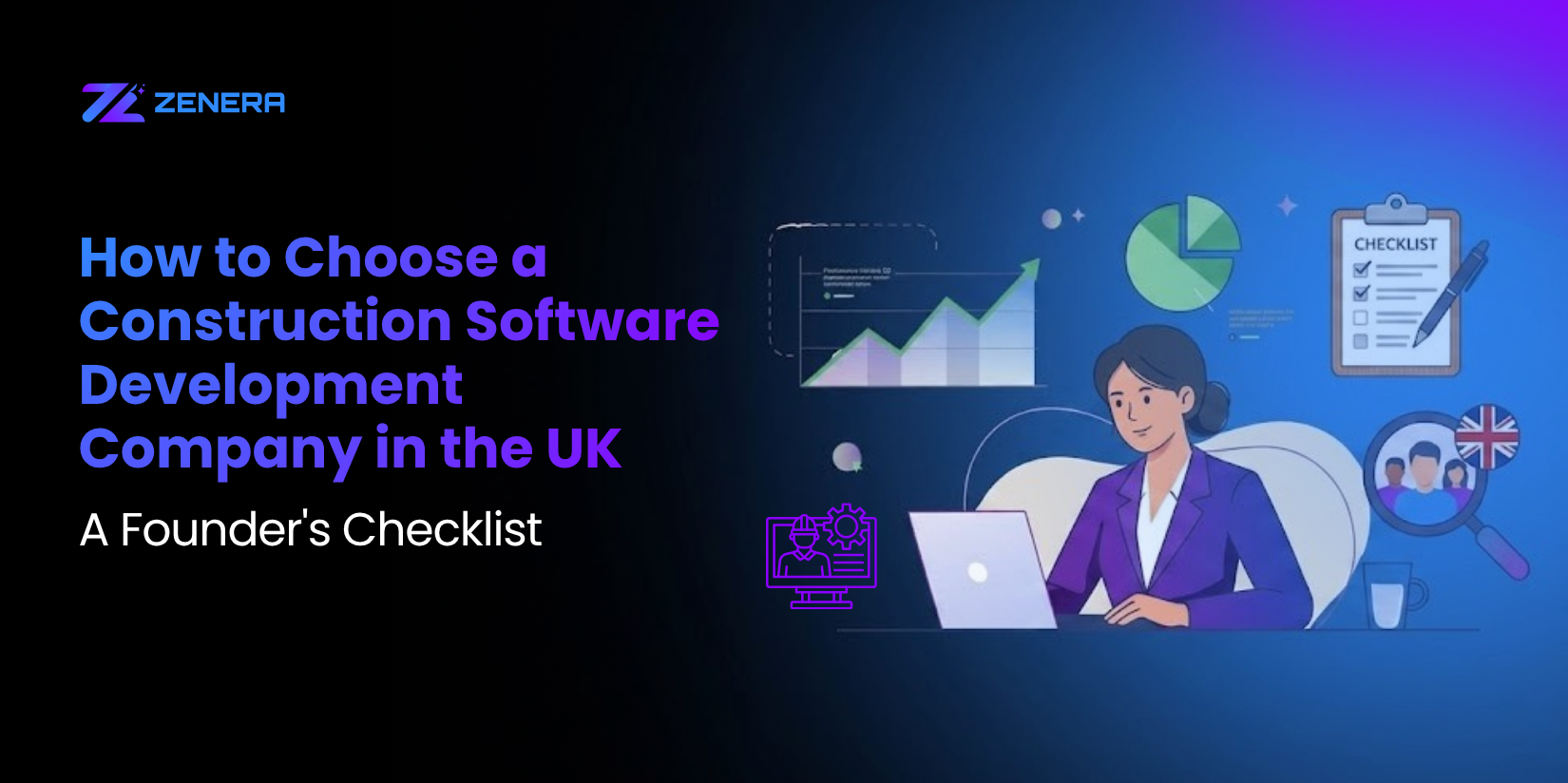
Here's a checklist of eight questions to help you find a custom construction software development company you can trust with your business.
Choosing the Right Software Partner Could Save Your Construction Business Thousands
The UK's construction technology market is growing fast, with more contractors moving away from spreadsheets, WhatsApp groups and paper site diaries towards purpose built software. Yet many of these projects still run over budget, miss deadlines, or sit unused six months after launch because the software never quite matched how the business works on site.
Across the wider industry, roughly seven in ten UK construction projects are delivered late, with average cost overruns approaching 28 per cent. Poor coordination and fragmented data are consistently named as contributing factors. Custom software built with a genuine understanding of construction workflows can close that gap. Software built by a team that has never set foot on a site, or worked to a JCT or NEC contract, usually can't.
The difference often comes down to choosing the right development partner from the start.
Instead of focusing purely on cost or technical terms, construction business owners should ask practical questions that reveal how a company works, communicates and understands the industry it's building for. Here are eight essential questions to ask before you commit.
-
Do They Actually Understand Construction, Not Just Software?
Generic development skills aren't enough anymore. A team that has built scheduling tools, job costing systems or site management apps for construction understands retentions, variations, subcontractor payments and CDM compliance in ways a general agency simply won't.
Ask for case studies from construction clients specifically, not a generic portfolio. Ask what problem the software solved on site, not just what features it had. A team that can explain why they made certain decisions, rather than reciting a features list, usually understands your industry properly.
A good development partner should explain the problem, the solution they created, and the results for the client’s business. This reveals more than any case study page.
-
How Do They Handle Communication and Project Updates?
Many software projects run into trouble because communication breaks down between the office and the people actually using the system on site.
Before you sign anything, find out:
- How often you'll get updates, and in what format
- Who your main point of contact is
- Whether you'll have access to a live project board or sprint tracker
- What the expected response time is for urgent issues
A reliable partner keeps you informed throughout the build. You should always know what stage the project has reached, what's being worked on and whether anything needs your input.
Clear communication reduces the risk of ending up with software that looks right on paper but doesn't fit how your teams actually work.
-
What Is Your Pricing Model and Are There Hidden Costs?
Fixed price, time and materials, or a dedicated team, each suits different projects. A fixed price works well when the scope is clearly defined, such as a single site management tool. Time and materials suits software that will keep evolving as your business grows. Neither is automatically better, but the wrong model for your situation creates friction fast.
Ask what's included and what isn't. Does the quote cover testing, deployment, documentation and post launch fixes, or are those billed separately later? A reputable partner will walk you through their pricing without dodging specifics. If an answer feels deliberately vague, that's worth noting.
-
Can They Show Verifiable Client References?
Testimonials on a website are easy to write and impossible to verify. A short call with another construction business that has used the same developer can tell you more in ten minutes than a dozen glowing reviews.
When you speak to references, ask about:
- How the team handled scope changes
- Whether deadlines were realistic and met
- What they'd do differently if they started again
A development company confident in its own work will happily connect you with former clients. Hesitation here is one of the clearest warning signs in the entire hiring process.
-
Who Owns the Code and Intellectual Property After Delivery?
This question gets skipped constantly and this is one of the most important questions founders should ask. Your contract needs to state clearly, in writing, that full IP ownership transfers to you upon final payment. Without that clause, you could end up legally unable to switch developers, modify the codebase freely, or even fully own your own product.
Check the ownership contract, which should cover source code handover, IP assignment, project documentation and full access credentials. Clear agreements now prevent expensive disputes later, especially if your custom software becomes a genuine competitive advantage.
Addressing ownership at the beginning of the project is far easier than resolving disputes later.
-
What Happens After the Software Goes Live?

Launching is only the beginning. Site management software, job costing tools and scheduling systems all need maintenance, security updates and the occasional new feature as your business grows or regulations change.
Ask potential partners:
- Do they provide ongoing support?
- How quickly are critical issues resolved, especially if something breaks mid project?
- Are maintenance packages available?
- Can they support future development requirements?
A dependable partner should be able to explain exactly how they handle support, updates and future development. Long term support often determines whether your software becomes a genuine business asset or an expensive one off.
Related Blog: 5 Signs Your UK Construction Business Needs Custom Software
-
How Do They Handle Things When Something Goes Wrong?
Every project faces challenges at some stage, whether it's a missed deadline, a third-party integration issue, or a feature that needs rethinking once it's tested on a live site. What separates a good agency is how they respond and resolves problems.
Ask how they've managed a project that encountered difficulties. Look for accountability and a clear process for resolving issues, rather than vague assurances. A team that can openly discuss past challenges and what they learned is usually more trustworthy than one that claims everything always goes to plan.
-
Do They Understand UK Construction Regulations and Ways of Working?
Local knowledge matters more than most founders expect. A partner familiar with the UK construction sector understands CDM 2015, the Construction Industry Scheme, JCT and NEC contract structures, and how UK site teams actually operate day to day.
If your business follows UK regulations and client expectations, choosing a partner who understands compliance requirements, payment structures and reporting standards means fewer surprises and a system that fits from day one, rather than one that needs reworking later.

Red Flags to Watch For When Hiring a Construction Software Partner
A few warning signs are worth flagging before you sign anything:
- Vague answers about timelines or pricing
- Hesitation to provide client references, particularly from other construction businesses
- No dedicated project contact
- Contracts that don't specify IP ownership
- No real understanding of how construction sites actually operate
- Pressure to sign quickly without time to review the proposal
If you notice two or more of these during initial conversations, it's worth pausing and asking more direct questions before committing.
Choosing a Development Partner You Can Actually Trust
Working through these eight questions before signing anything will save you from the most common and most expensive hiring mistakes construction business owners make. The right partner won't just write code. They'll understand how your business runs on site and in the office, communicate clearly, and stand behind their work long after launch.
If you're searching for a custom software development company for construction businesses in Essex, UK, Zenera builds bespoke software with full transparency on pricing, IP ownership and post launch support from day one. From discovery and development through to deployment and ongoing maintenance, the team works as an extension of your business, not just another supplier.
A Better Software Project Starts With Better Questions
By asking the right questions, construction business owners can identify partners that offer more than technical skill. They can find a team that understands the industry, communicates openly, and stays committed long after the software goes live.
Making the right choice today can save time, reduce costs, and give your business a genuine advantage over competitors still running on spreadsheets.
Get in touch with Zenera and ask us every question on this list. We expect you to.