Digital tools are part of daily life on site and in the office, yet many UK construction businesses find their software gets in the way instead of supporting the work. As subscriptions pile up, site data lives in one app, job costing sits in another, and RAMS end up in a third. At some point the question shifts from “which project management tool should we try next” to “do we need a system built specifically for how our business runs sites and projects”.
For many SMEs and growing businesses across Essex, London, and the wider UK, custom software development is the more practical, long-term solution.
Custom software development gives you something different. It gives you a system built around your actual workflows, your team and your business goals. These purpose-built systems replace disconnected apps with unified tools created for real construction processes, not generic templates borrowed from other industries.
Why Generic Software Falls Short for Construction Businesses
Standard project management and CRM tools can solve basic problems quickly. They are usually easy to set up and cost-effective in the beginning. But they're built for general business use, not for the day-to-day reality of running construction sites, subcontractors and variable project costs.
As your business grows and processes become more complex, standard software can create challenges such as:
- Limited flexibility for site-based workflows
- Integration issues between office systems and site tools
- Rising subscription costs across multiple platforms
- Scalability limits once you're managing several projects at once
That is where custom business applications and workflow automation software built for construction start to offer real value.
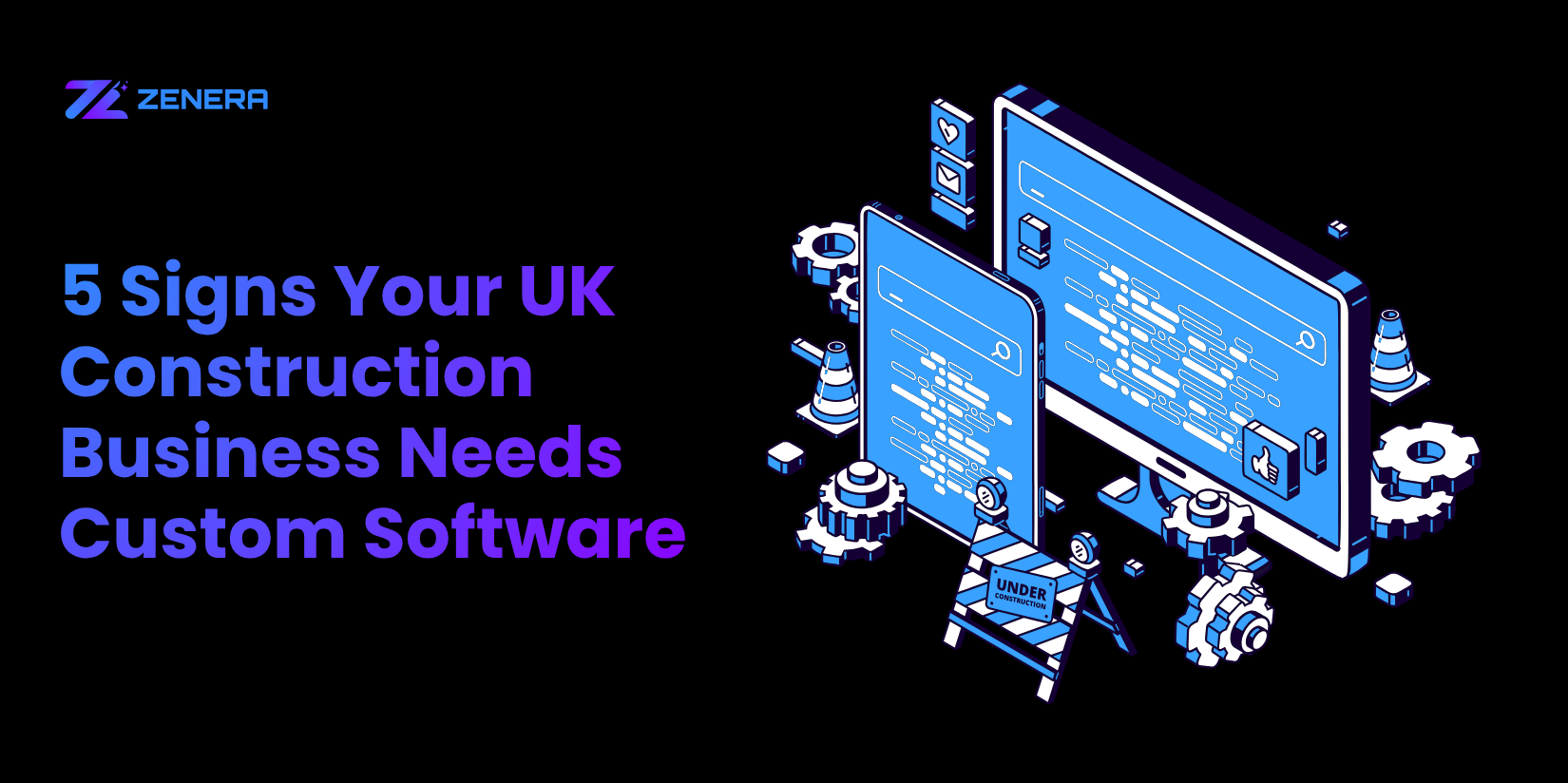
5 Signs Your UK Construction Business Needs Custom Software Development
Every growing construction business reaches a point where standard software can't keep up with how sites and projects actually run. Below are five signs it might be time to move away from standard SaaS platforms.
1. You're Paying for Features Your Team Never Uses
Standard software platforms are built for the widest possible audience, which means most are packed with features designed for someone else's business, not a construction one. You end up paying for an enterprise tier just to access the two or three functions your site managers and office staff actually use.
According to research by Zylo, businesses use only around 47% of the SaaS features they pay for. That's more than half your subscription budget covering functionality that adds nothing to how your sites run.
Custom business applications solve this. Every feature is built around your operation, whether that's job costing, RAMS or subcontractor management. Instead of paying for a tool controlled by another provider, you invest in a system that supports your business, scales with your projects and doesn't add extra cost every time you bring on a new site or user.
This sign is particularly relevant when software costs are rising without a corresponding improvement in site productivity.
2. Your Business Runs on Too Many Disconnected Platforms
Most construction businesses don't set out to build a complicated software stack. It builds up gradually as new needs appear.
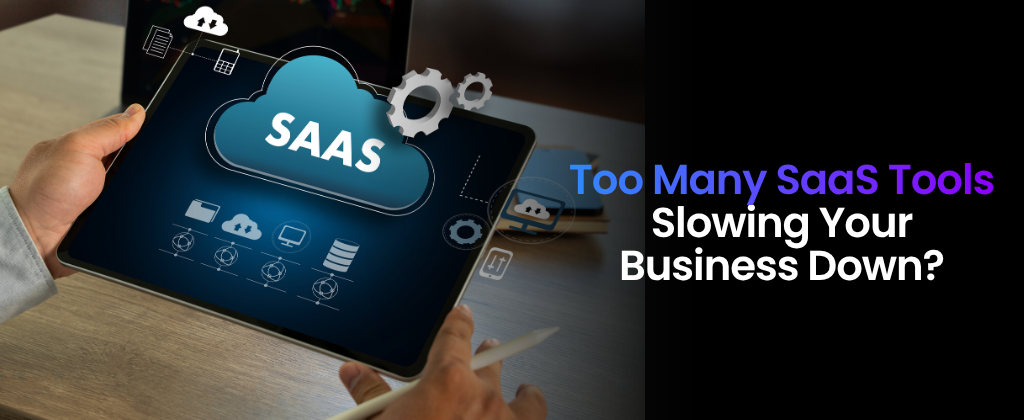
One tool for enquiries and CRM. Another for invoicing and job costing. A separate app for RAMS and toolbox talks. A spreadsheet for plant tracking. WhatsApp or texts for site communication. Over time, these systems rarely talk to each other.
This leads to disconnected workflows such as:
- Re-entering the same job or client data across multiple systems
- Exporting spreadsheets to piece together a full picture of a project
- Switching between apps just to check progress on a single site
- Inconsistent reporting between the office and site teams
- More errors creeping in as jobs get handed between systems
Research consistently shows employees can lose 20 to 30 percent of productive time switching between tools and hunting for information. On a construction site, that's time better spent keeping projects on programme.
This is where custom software development services become valuable. A single platform built around how your business actually operates removes the need for constant tool switching and gives everyone, from site managers to the office, one source of truth.
For growing contractors, housebuilders, groundworks firms and M&E specialists across the UK, this kind of consolidation can deliver real efficiency gains almost immediately.
3. Your SaaS subscriptions are increasing Without Delivering Better Value
SaaS subscriptions can look cost-effective early on, especially for smaller contractors, but pricing tends to climb fast as your business and headcount grow.
Typical cost issues include:
- Paying per user, even for site staff who've moved on to another job
- Upgrading a whole plan just to access one extra feature
- Running several subscriptions that overlap in what they do
- Hidden charges for integrating with your accounting software
Industry research suggests SMEs waste a significant share of their software budget on tools that go unused or duplicate each other.
This is where custom software offers a longer-term financial advantage. Instead of ongoing subscription fees for generic features, you invest in:
- A system built around your actual job costing, scheduling and reporting needs
- Scalable architecture designed for taking on more sites and projects
- Features developed from how your team really works, not a generic product roadmap
SaaS tools remain useful early on, but they tend to become less efficient as your operation grows more complex. For many UK construction SMEs, a custom system offers more predictable costs over time and a better return on investment.
4. Your data is scattered across multiple systems with no real visibility
Good decisions on a construction project depend on accurate, timely data, yet many contractors still work with disconnected reporting systems.
This typically results in:
- Manual report generation from different tools
- Conflicting cost figures between the site and the office
- Slower decisions on variations because the information sits in five different places
- Exporting spreadsheets from different tools
- Limited real-time visibility into performance
When data is scattered like this, management ends up making calls based on partial or outdated information. A custom business application fixes this by bringing all your operational data into one system with real-time visibility across sites.
This enables:
- Accurate cost and progress tracking across every project
- Faster decisions on variations and resourcing
- Less time spent manually pulling reports together
- Better forecasting for upcoming projects and cash flow
For construction businesses running multiple sites or hybrid office and site teams, this level of visibility becomes essential for staying efficient and competitive.
In many cases, contractors only see the real value of custom software once they experience how much faster decisions become with properly structured project data.
5. You are planning to scale, automate, or launch a digital product
Growth exposes the limits of generic software fast. The tools that work for five sites rarely hold up once you're running twenty.
If your business is planning:
- Automating repetitive site processes like RAMS, timesheets or toolbox talks
- Expansion into new regions across the UK
- Launching a client-facing portal for progress updates and reporting
- Launch of a digital product or SaaS platform around your construction expertise
Then existing SaaS tools will start to hold you back. At this stage, many contractors partner with a custom software development company to design systems that scale with them.
For example, Zenera supports construction businesses through structured MVP development, helping firms validate a new site management or reporting tool before committing to a full platform build.
Custom systems provide:
- API-first architecture for connecting with accounting, CRM and other tools
- Scalable infrastructure that grows with your project pipeline
- Secure data handling aligned with UK standards
- The flexibility to add features as your business changes
This is especially valuable for contractors and SMEs moving from manual or semi-automated processes into fully digital site and project management.
When SaaS Is the Right Choice and When It Is Not
To be clear, SaaS products are still excellent for plenty of everyday business functions. Email, video calls, accounting and HR are all well served by established platforms. There's nothing wrong with SaaS for standard, non-specialist needs.
The real question is whether SaaS is the right foundation for the processes that actually differentiate your construction business. If your edge comes from how efficiently you run sites, how well you manage subcontractors, or how tightly you control job costs, generic software will always put a ceiling on your results.
Custom software development isn't just a technology decision. For a construction business, it's a business strategy decision.
Scale your Business with Custom Software Solutions
If any of the five signs above sound familiar, it may be worth exploring how custom software could support your operations more effectively.
Every growing construction business eventually reaches a point where operational complexity outpaces what standard software can handle. That's where strategic investment in custom software development services becomes essential.
Zenera is a custom construction software development company, working with contractors and construction businesses across Essex, London and the UK. We build custom site management systems, subcontractor and job costing tools, and scalable software platforms designed around how construction businesses actually operate.
From initial discovery and planning through to development, integration and ongoing support, Zenera works with construction businesses to deliver software that fits how they actually build.
Plan your next software project with Zenera and build a system designed around your sites, your subcontractors and your business.